






The state of cloud computing in 2026 and beyond
Cloud computing is an ever-evolving field—and the conversation surrounding it has matured.
To understand what’s changing today, we surveyed nearly 600 IT professionals across key markets, including the United States, the United Kingdom, and Germany, about their cloud and end-user computing (EUC) strategies.
Along with a shift from choosing single destinations to sustaining operational pressure, we saw IT leaders weigh in on:
- Where workloads should live
- How much administration today’s environments require
- Whether costs are remaining predictable over time
- And how security and compliance requirements are shaping infrastructure decisions
Ultimately, this is reshaping EUC and virtualization choices. The industry is starting to see strong near-term intent to revisit desktop-as-a-service (DaaS) and virtual desktop infrastructure (VDI) platforms. This is happening alongside broader concerns about vendor lock-in and data sovereignty.
In this report, you’ll explore what’s working, what's not, and what IT teams are prioritizing next—from hybrid work and cloud placement to SaaS trends, security posture, and practical AI use cases in end-user computing.
10 key insights for cloud computing in 2026
The Parallels Cloud Survey 2026 revealed clear patterns and trends for IT professionals this coming year.
1. Two-thirds of IT professionals are actively seeking change in their DaaS and VDI solutions
Approximately 66% of those surveyed reported that their organization is currently looking for a new DaaS/VDI solution, up from 58% in 2025.
2. Change is happening on short timelines
Among those planning to change DaaS and VDI platforms, most expect to implement a new solution within six months—with 53.3% targeting four to six months (up from 50% in 2025) and 17.2% targeting zero to three months.
3. Operational costs are the core pain for organizations
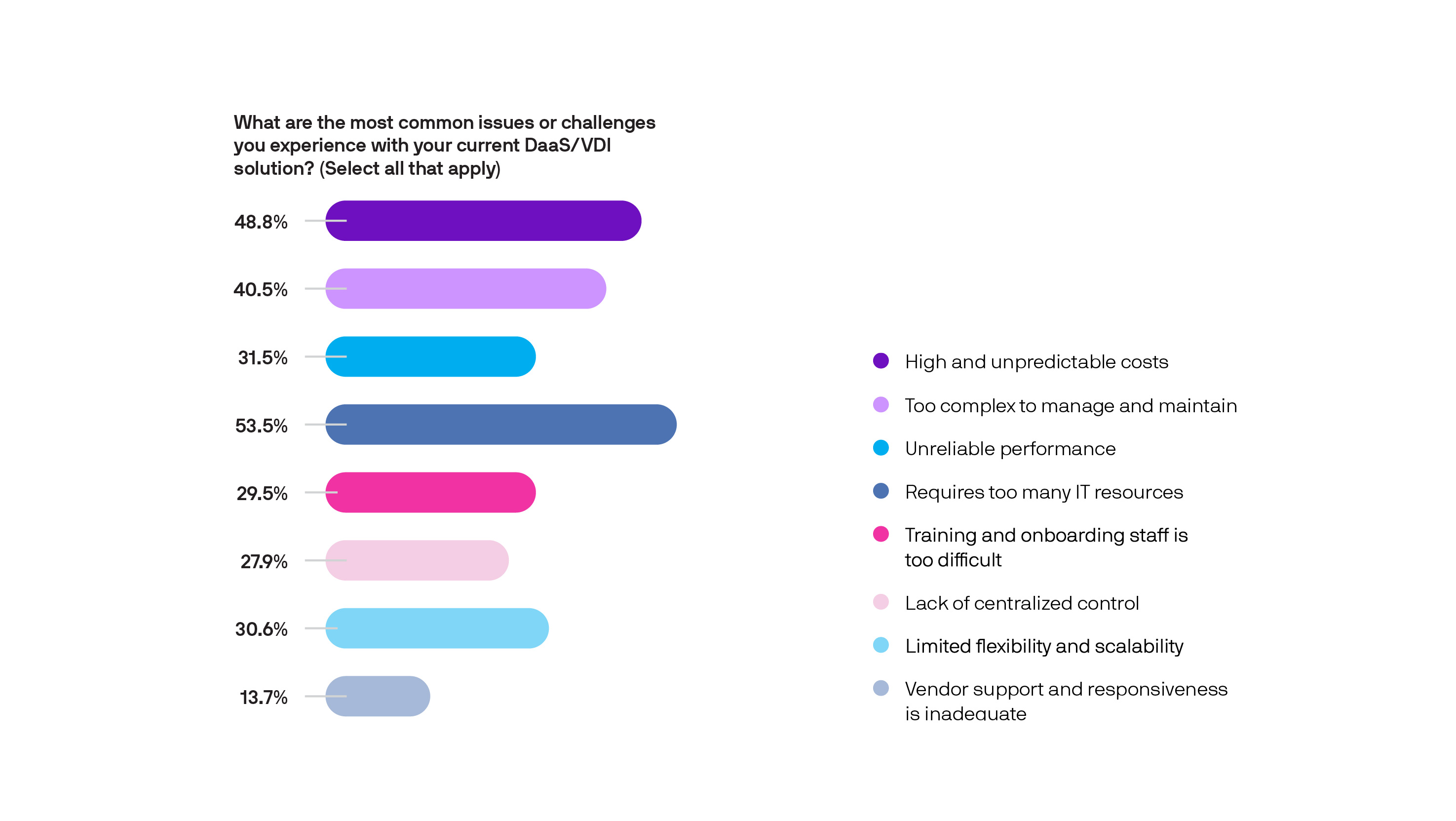
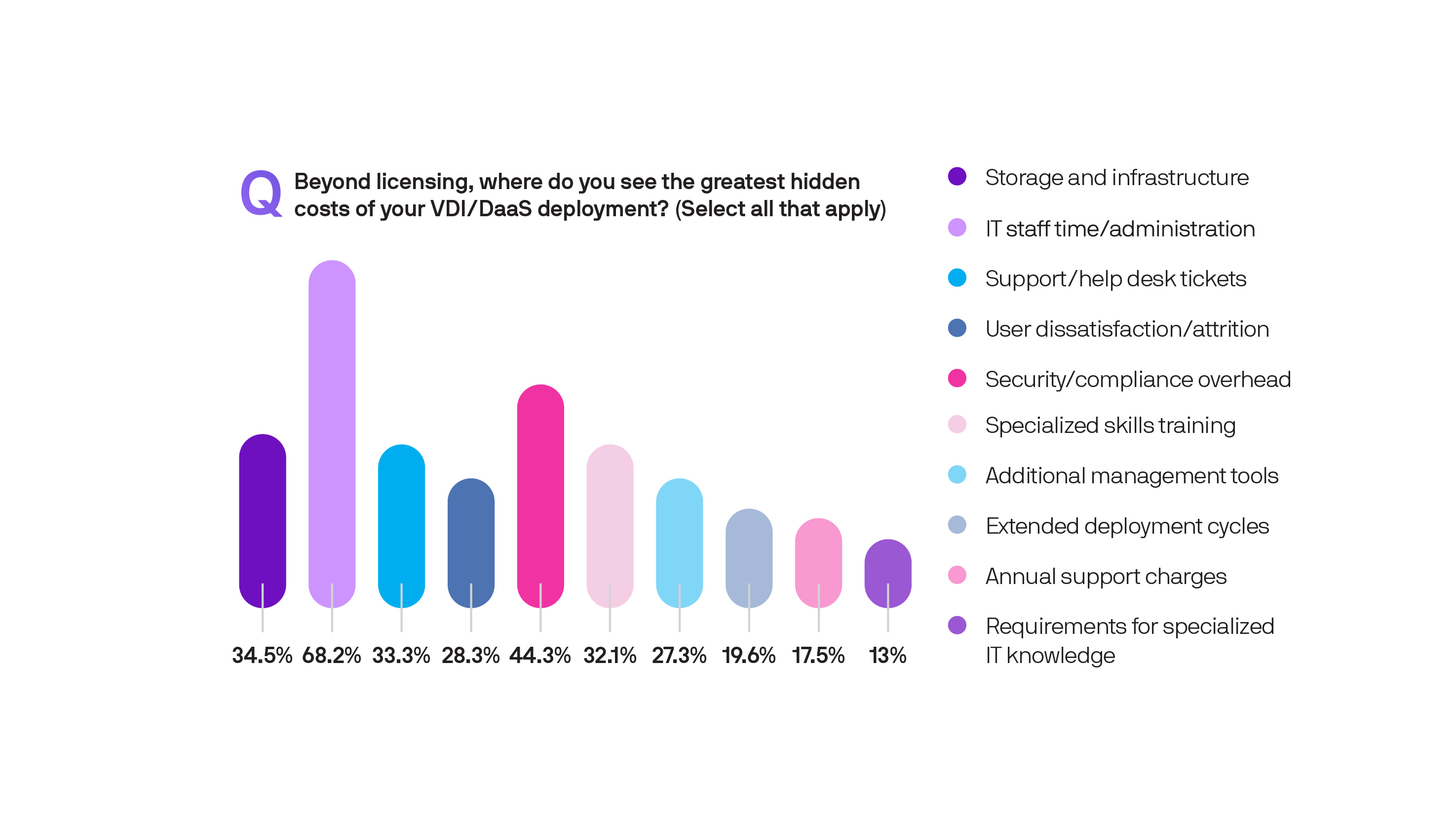
Of those surveyed, 53.5% reported that their current DaaS or VDI requires too many IT resources, and 68.2% cited IT staff time and administration as the biggest hidden cost beyond licensing.
4. Concerns over vendor lock-in are nearly universal
An overwhelming 94% of respondents reported concerns about becoming locked into a single EUC/VDI/DaaS vendor.
5. Hybrid work remains the norm
Roughly eight in 10 organizations maintain remote work as a meaningful part of their model. Overall, 44.2% describe their workforce as hybrid and 33.5% as primarily remote.
6. Most cloud environments are mixed by default
About 42.9% of respondents report running workloads in multiple clouds, and 33% use a hybrid of on-premises and cloud resources. Together, these mixed-cloud environments encompass three in four organizations.
7. Public cloud placement is being reevaluated
About 87% of respondents show some level of intent to move at least part of their workloads away from the public cloud in 2026, relatively consistent with numbers from 2025. Of these numbers, 36% are targeting a hybrid approach and 13.4% plan to stay fully on-premises. A further 37.5% are weighing their options and at least considering partially moving workloads on-premises.
8. Security incidents are becoming more common
Of those surveyed, 48.9% say their organization experienced a security breach in the past year. This is up from 41.8% in 2025.
9. Data sovereignty is a major constraint
In the survey, 84.2% of respondents reported concerns over compliance, residency requirements, and perceived risk tied to foreign data centers.
10. AI use cases are becoming more practical
As with many industries, AI is seeing growth in pragmatic uses for end-user computing—with a focus on concrete improvements and tangible results. The top priorities for respondents included security monitoring (58.1%), cost optimization (49.5%), and issue detection and resolution (46.8%). Responses showed a more cautious appetite for budget spending, with only 28.5% willing to spend more on AI features.
Survey methodology
We surveyed nearly 600 IT professionals primarily in the United States, the United Kingdom, and Germany, with participation from other countries as well.
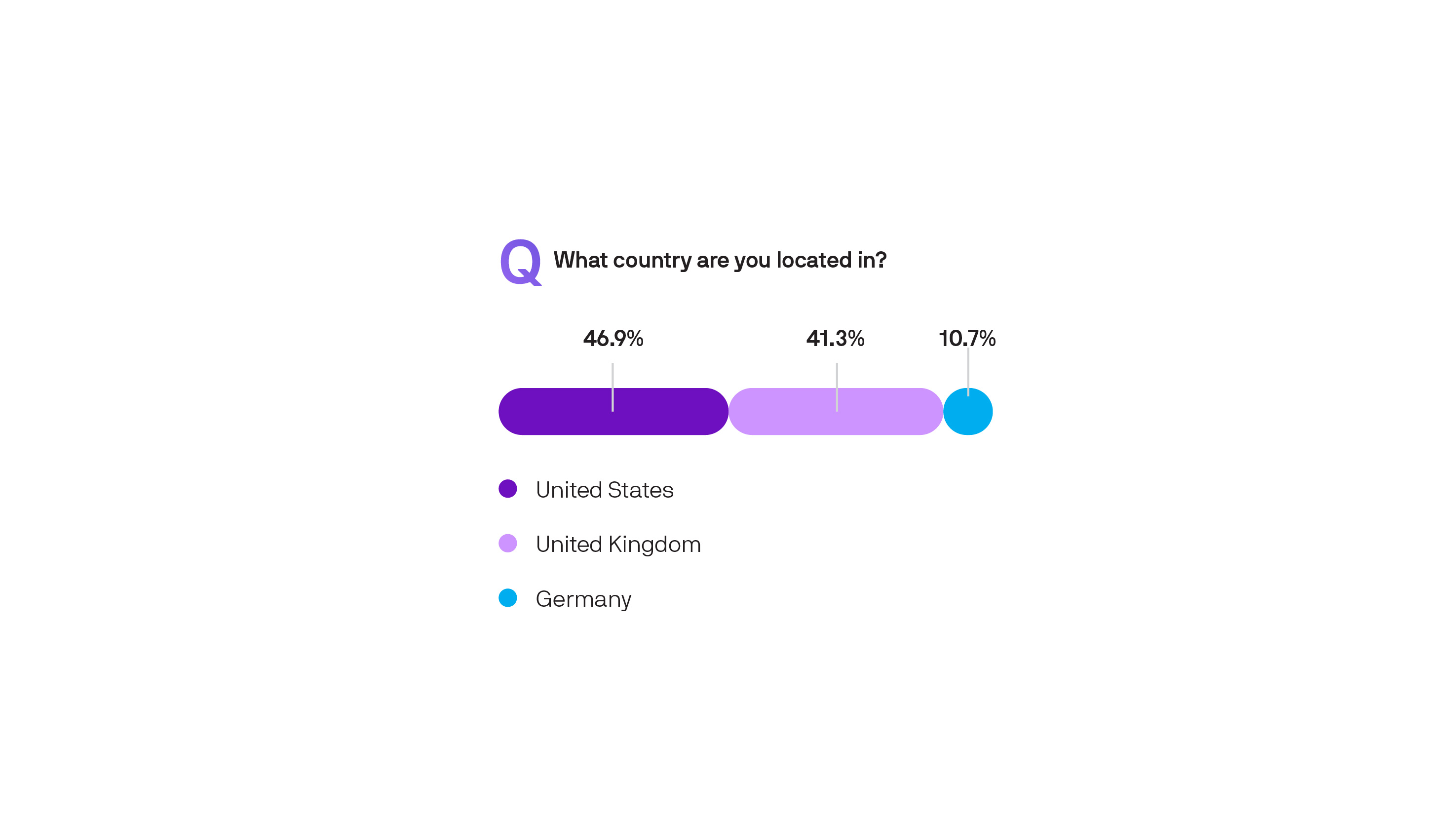
Respondents represented a range of organizations, from smaller businesses to large enterprises.
- 1-300 employees: 8.2%
- 301-500: 12.5%
- 501-1,000: 34.5%
- 1,001-5,000: 36.1%
- 5,001+: 8.6%
Respondents represented a mix of industries and business types, including enterprise IT teams, independent software vendors (ISVs), managed service providers (MSPs), and hardware vendors.
Certain questions were structured conditionally based on previous answers and may affect overall base sizes for those responses. This is reflected in chart keys throughout the report.
Hybrid work continues to transform IT
Hybrid work models continue to shape infrastructure strategies, security posture, and operating burden.
In 2026, 44.2% of organizations employ a hybrid workforce, and 33.5% employ a primarily remote workforce. Only 16.4% report being fully on-site.
This presents two key issues for IT.
First, it changes the security agenda. Hybrid work introduces unique challenges, and topping the list are more complex endpoint security management and managing access for remote users, followed by a stronger need for employee security awareness and training.
Second, the issue of tool sprawl outside IT control is growing. Of those surveyed, 72.4% report that employees frequently or occasionally use unauthorized SaaS, collaboration, or remote access tools.
Key insights
Hybrid work increases endpoint and access complexity, which raises workload for IT and security teams.
Shadow IT is common and adds unmanaged risk exposure in many organizations.
Remote work strategies now require consistent controls across identity, access, endpoints, and web usage—not just connectivity.
Cloud placement is being rebalanced
Cloud adoption remains broad today, but most organizations are operating in mixed environments.
Q: Are you running workloads in the cloud?
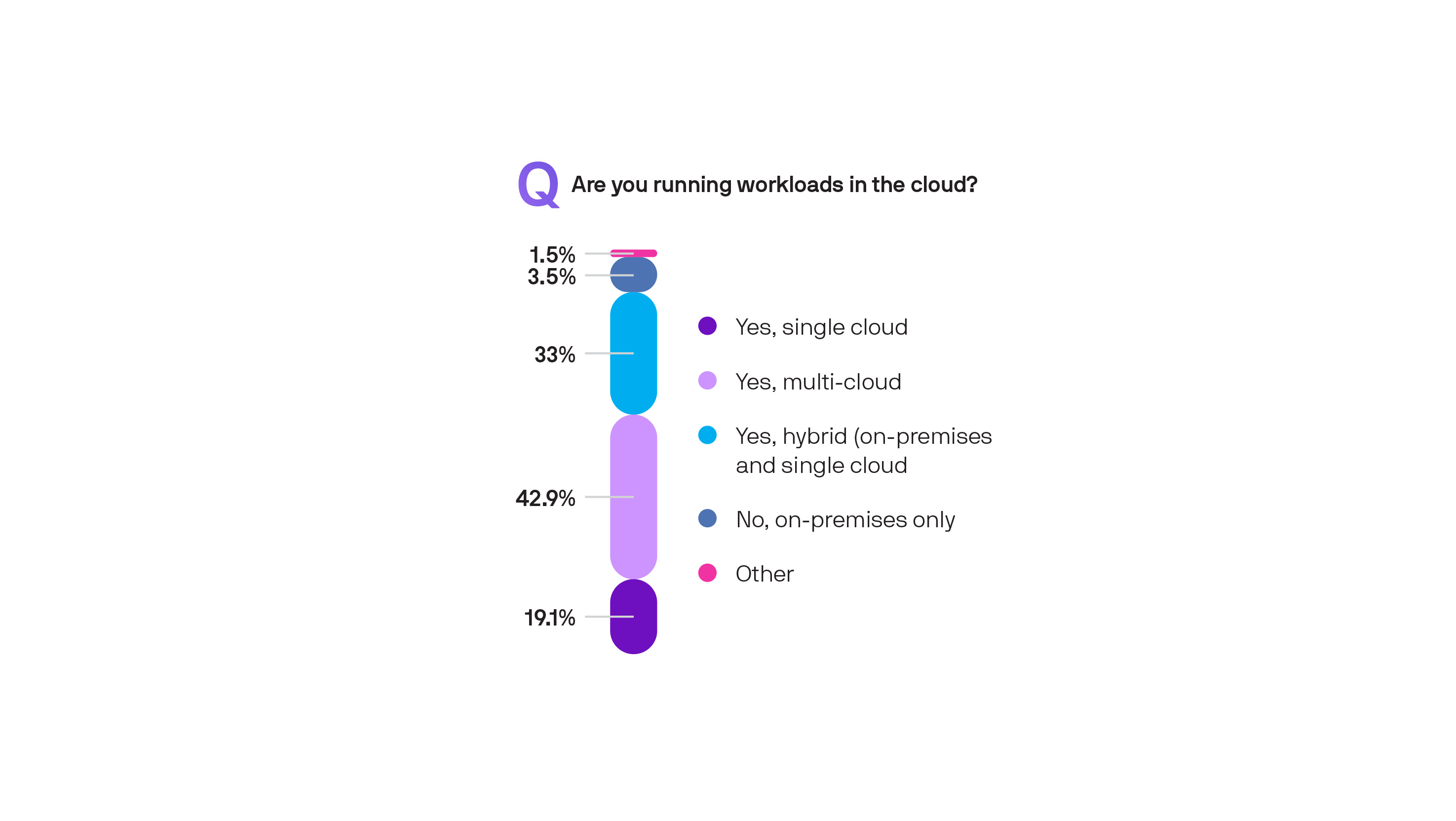
Together, these numbers mean that about 76% of organizations operate in multi-cloud or hybrid environments. This reinforces that cloud strategy is increasingly a mix rather than a singular model.
Public cloud placement is also being reevaluated.
Q: Do you anticipate migrating workloads from the public cloud back to on-premises infrastructure, currently or in the future?
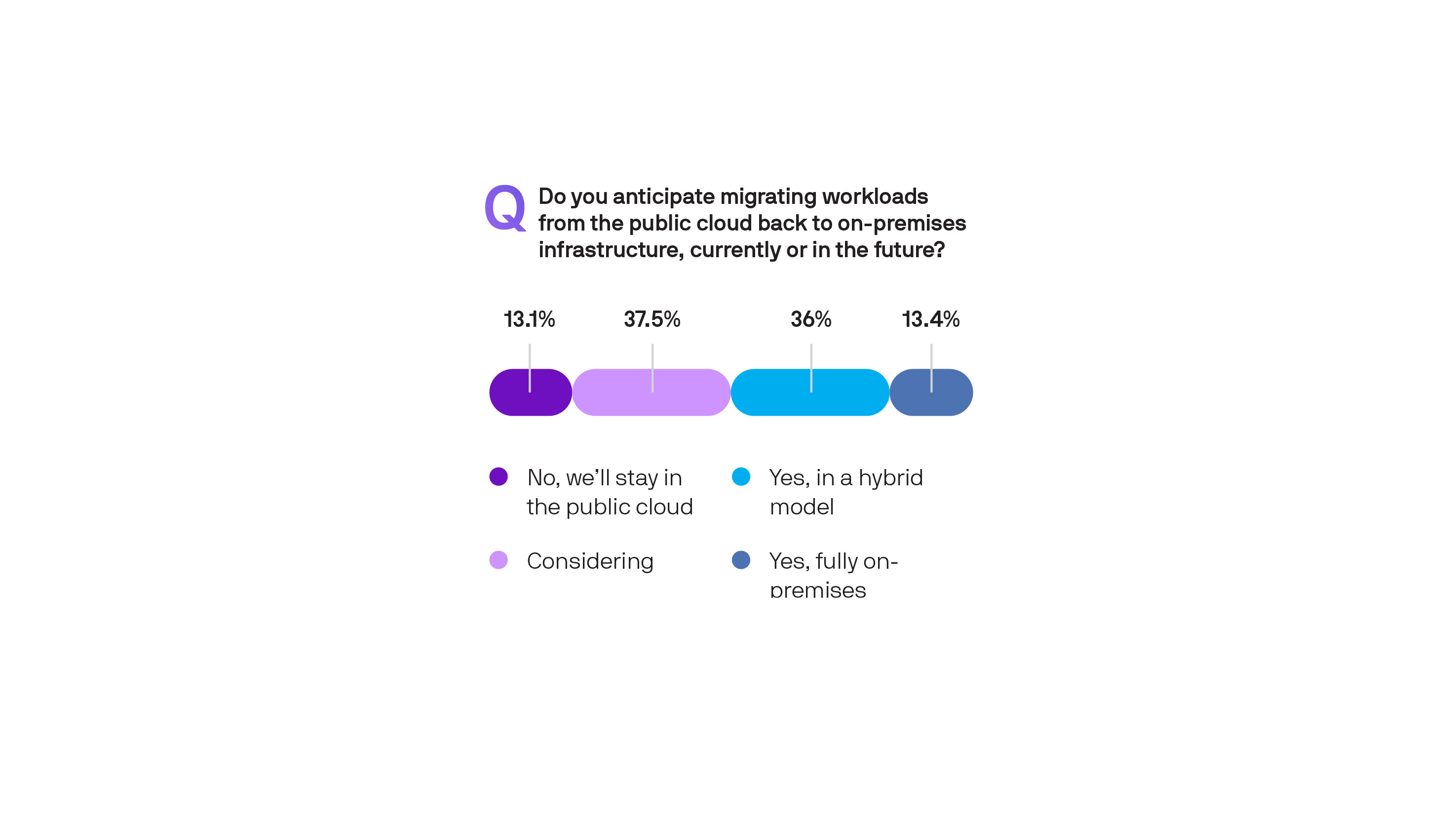
As discussed earlier, public cloud placement is being actively reevaluated. Overall repatriation intent remains high and comparable to 2025, but organizations are moving out of the consideration stage. Fewer respondents say they are simply considering a move, and more are actively planning a hybrid approach.
This is not simply a reversal of cloud adoption. It signals a more selective approach to workload placement, inspired by cost predictability, performance expectations, control, and compliance.
Key insights
Multi-cloud and hybrid are the dominant operating realities.
Public cloud placement is being reviewed, with hybrid as a common target model.
Market disruption is accelerating EUC change
EUC and virtualization strategy is where cost, operations, and vendor risk intersect. This year’s results show high intent—and short timelines—to change.
Q: With significant disruption in the VDI/DaaS market, what leading reasons can influence change in your company’s IT strategy? (Select all that apply)
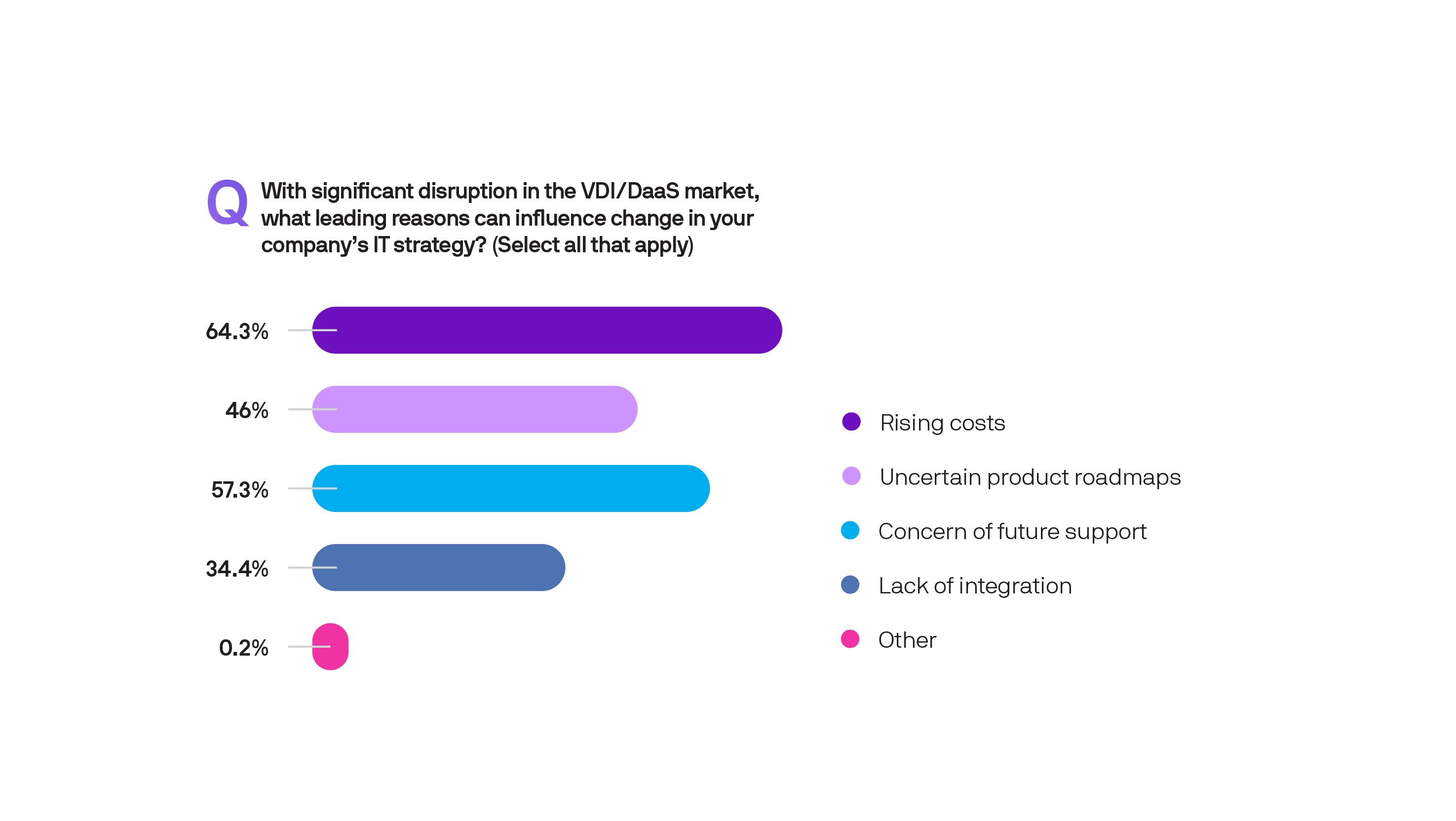
- Rising costs: 64.3% (42% in 2025)
- Concern of future support: 57.3% (26% in 2025)
- Uncertain product roadmaps: 46.0% (14% in 2025)
- Lack of integration: 34.4% (17% in 2025)
Q: Is your organization seeking a new DaaS/VDI solution right now?
66.0% say yes, compared to 58% in 2025.
Q: If so, what is your potential timeframe for implementation?
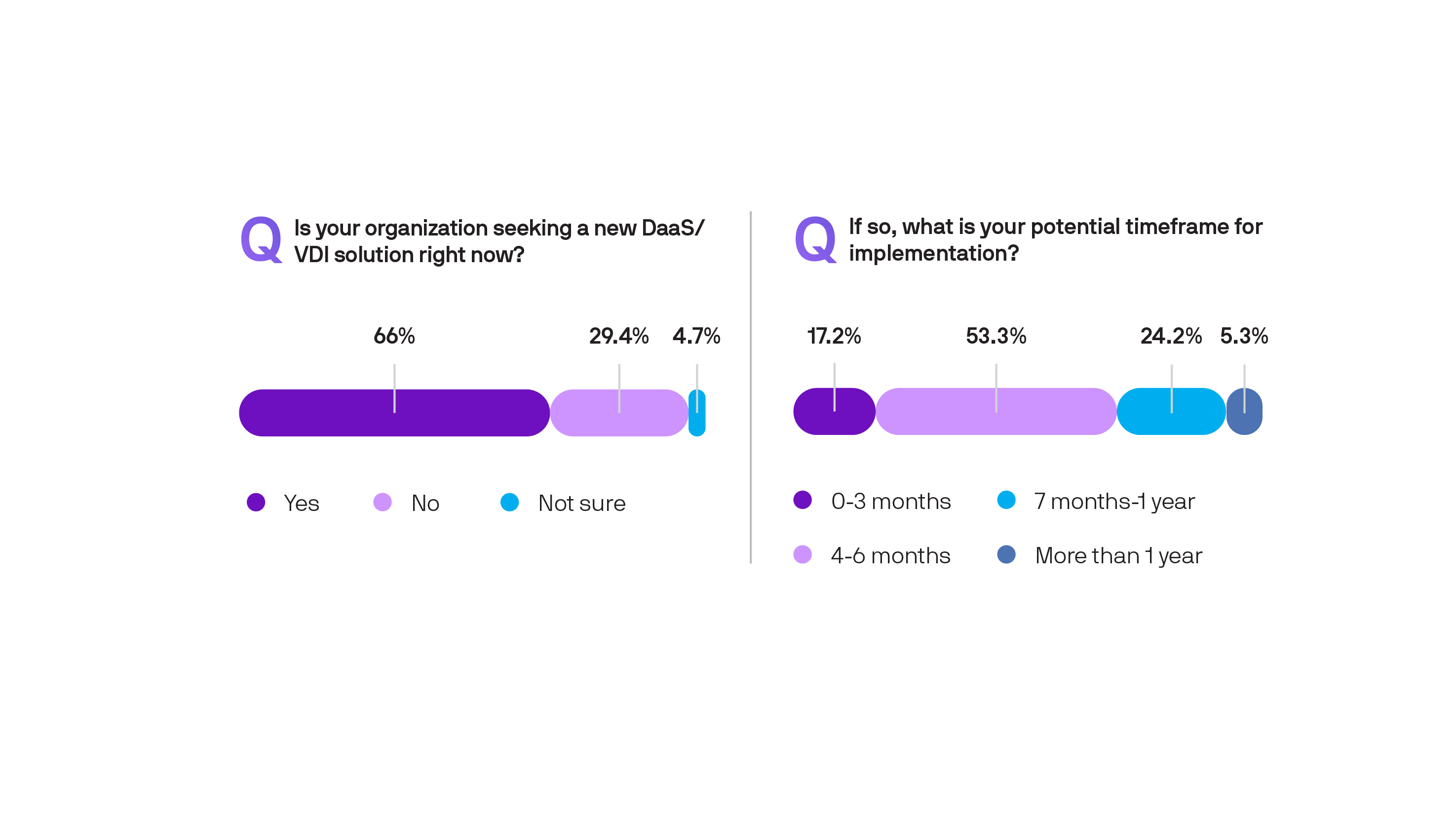
- 17.2%: 0 to 3 months (20% in 2025)
- 53.3%: 4 to 6 months (50% in 2025)
- 24.2%: 7 to 12 months (24% in 2025)
- 5.3%: More than 1 year (7% in 2025)
Put simply, the numbers show that for many organizations, implementing a new DaaS or VDI solution is an active 2026 decision, not a long-term plan.
Q: What is the main barrier preventing your organization from switching to a new DaaS/VDI solution?
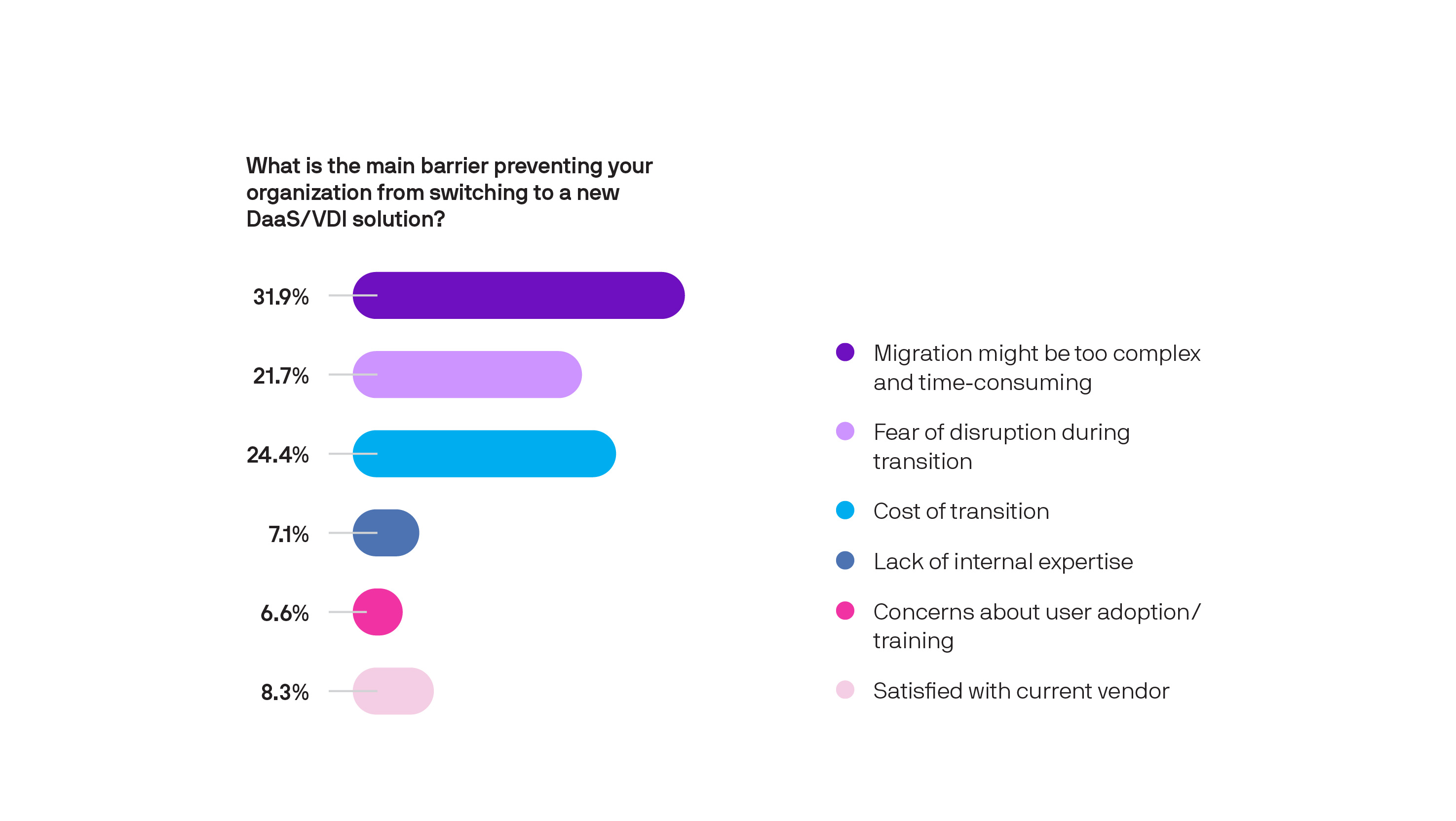
For respondents, the top blockers preventing them from migrating are complexity and transitional risks. The top challenges they face with their existing DaaS and VDI solutions are operational load and hidden costs.
Q: What are the most common issues or challenges you experience with your current DaaS/VDI solution? (Select all that apply)
Q: Beyond licensing, where do you see the greatest hidden costs of your VDI/DaaS deployment? (Select all that apply)
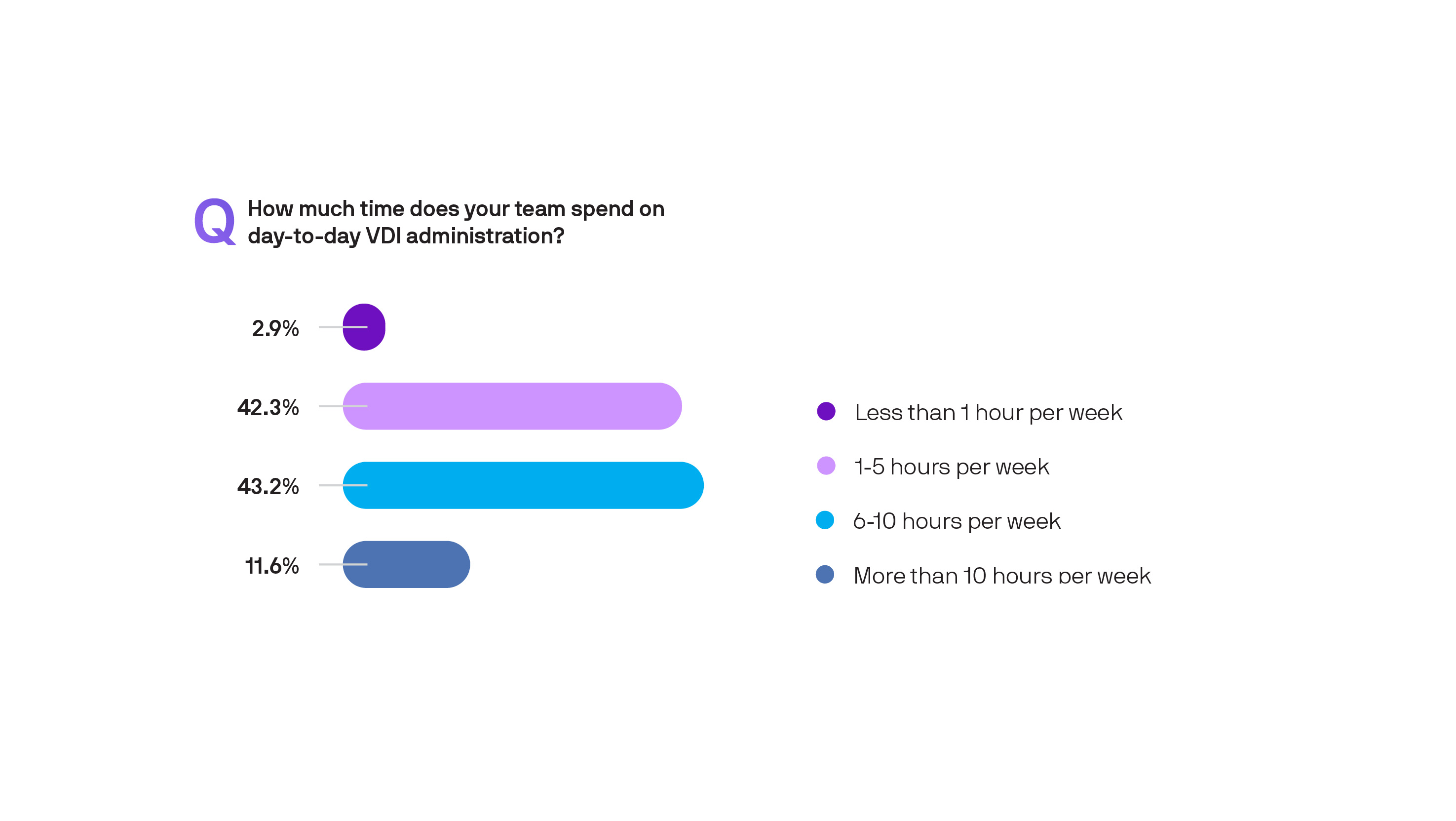
Time spent reinforces the same story.
Q: How much time does your team spend on day-to-day VDI administration?
Key insights
Change is active: Two-thirds are seeking a new solution, and most plan to move within six months.
Drivers of change have intensified since 2025, especially rising costs, future support concerns, and uncertainty around roadmaps.
Decisions are made based on cost, vendor risk, and integration, but daily operational load is what teams feel first.
Migration complexity and disruption risk are the biggest blockers, which makes transition planning a deciding factor.
Hidden costs are mainly people time, plus security and training overhead.
Comparing SaaS and hosted application usage in organizations
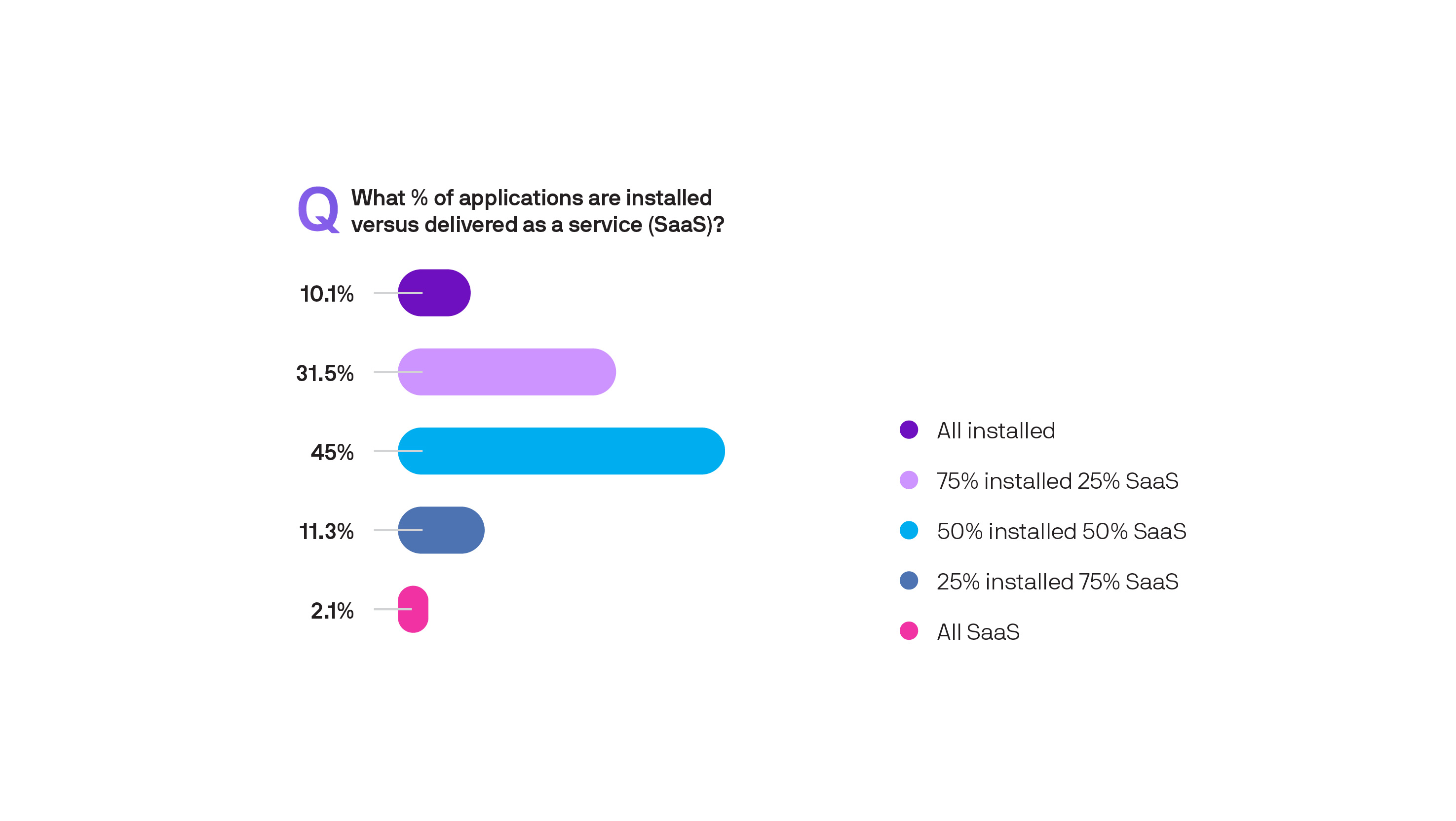
SaaS usage is continuing to rise, but the majority of organizations still report operating in a mixed-application environment.
Q: What % of applications are installed versus delivered as a service (SaaS)?
Q: Over the past 12 months, how has the balance between installed applications and SaaS solutions changed?
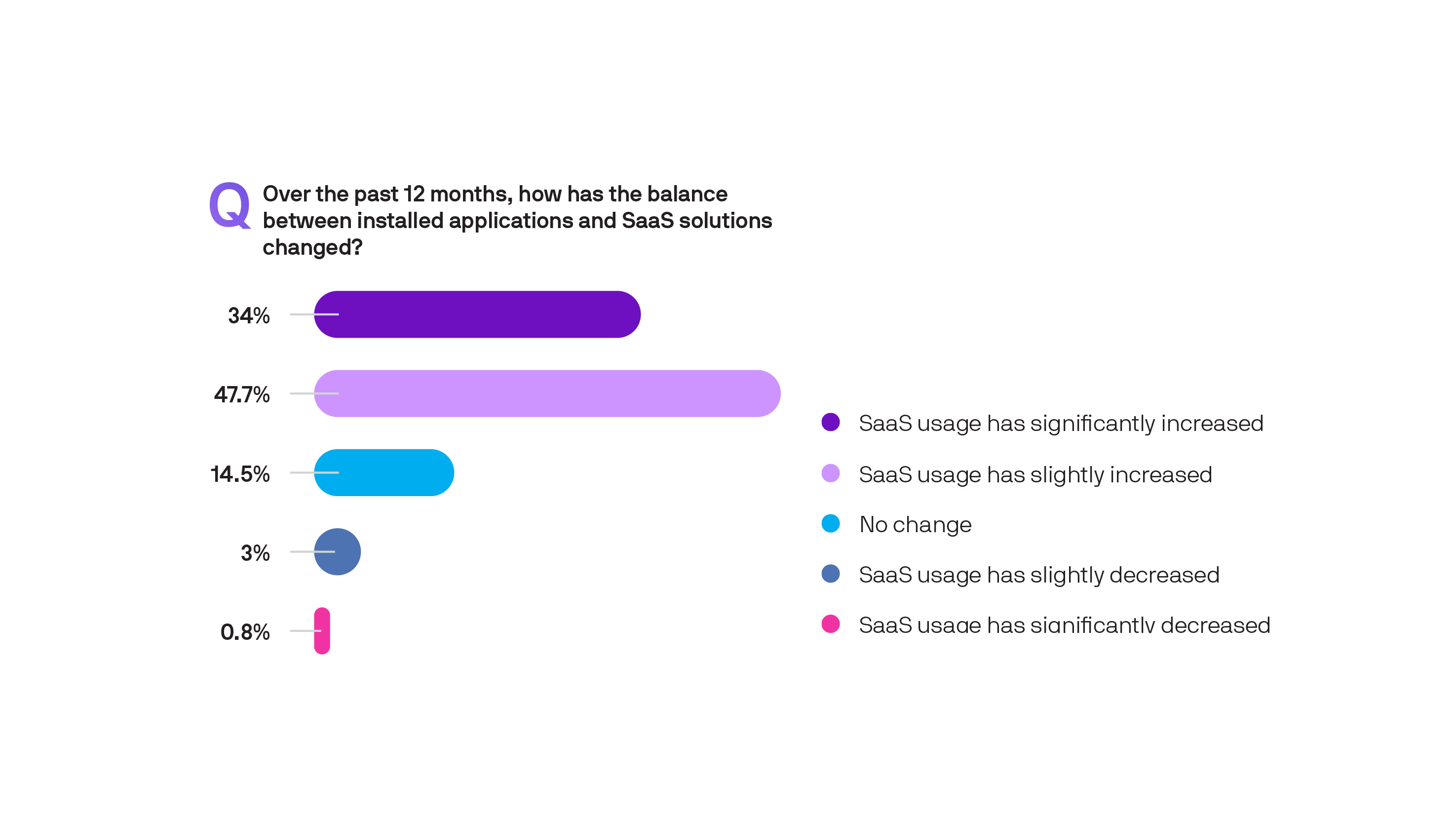
About 81.7% say SaaS usage increased (34.0% significantly, 47.7% slightly).
Q: What is the primary impact of SaaS on your organization?
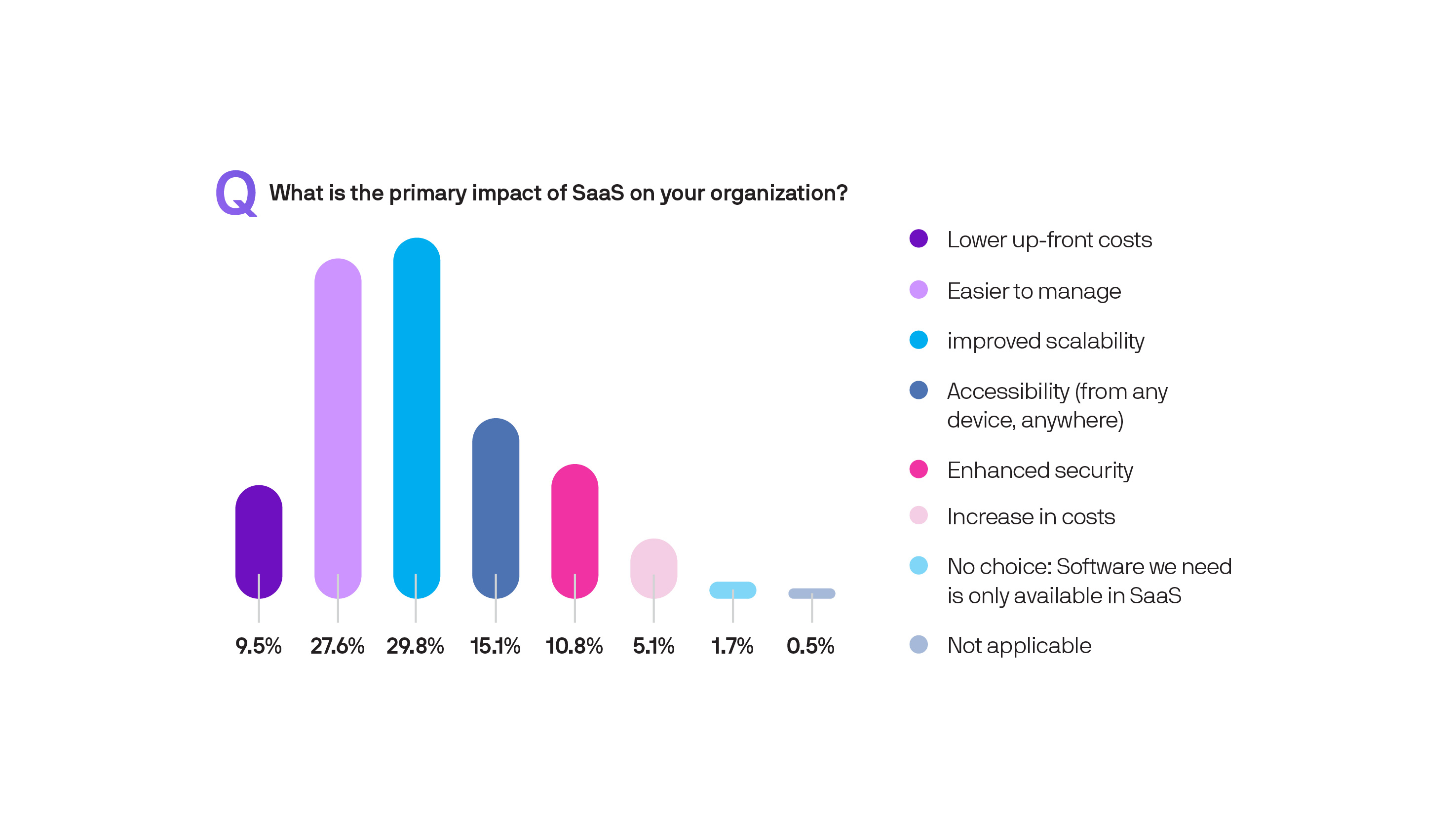
The top responses are improved scalability (29.8%) and easier management (27.6%), followed by accessibility (15.1%).
Key insights
SaaS is increasing, but most organizations still operate in mixed environments where installed and hosted applications remain important.
Mixed application environments increase the need for consistent security and access controls across both SaaS and non-SaaS workflows.
Modern security adoption remains a challenge
Security remains a top concern, and budgets reflect this concern.
Q: What is your organization’s budget outlook for cybersecurity next year?
Approximately 49.2% expect a significant increase and 35.9% expect a slight increase.
Q: Has your organization experienced a security breach in the past year?
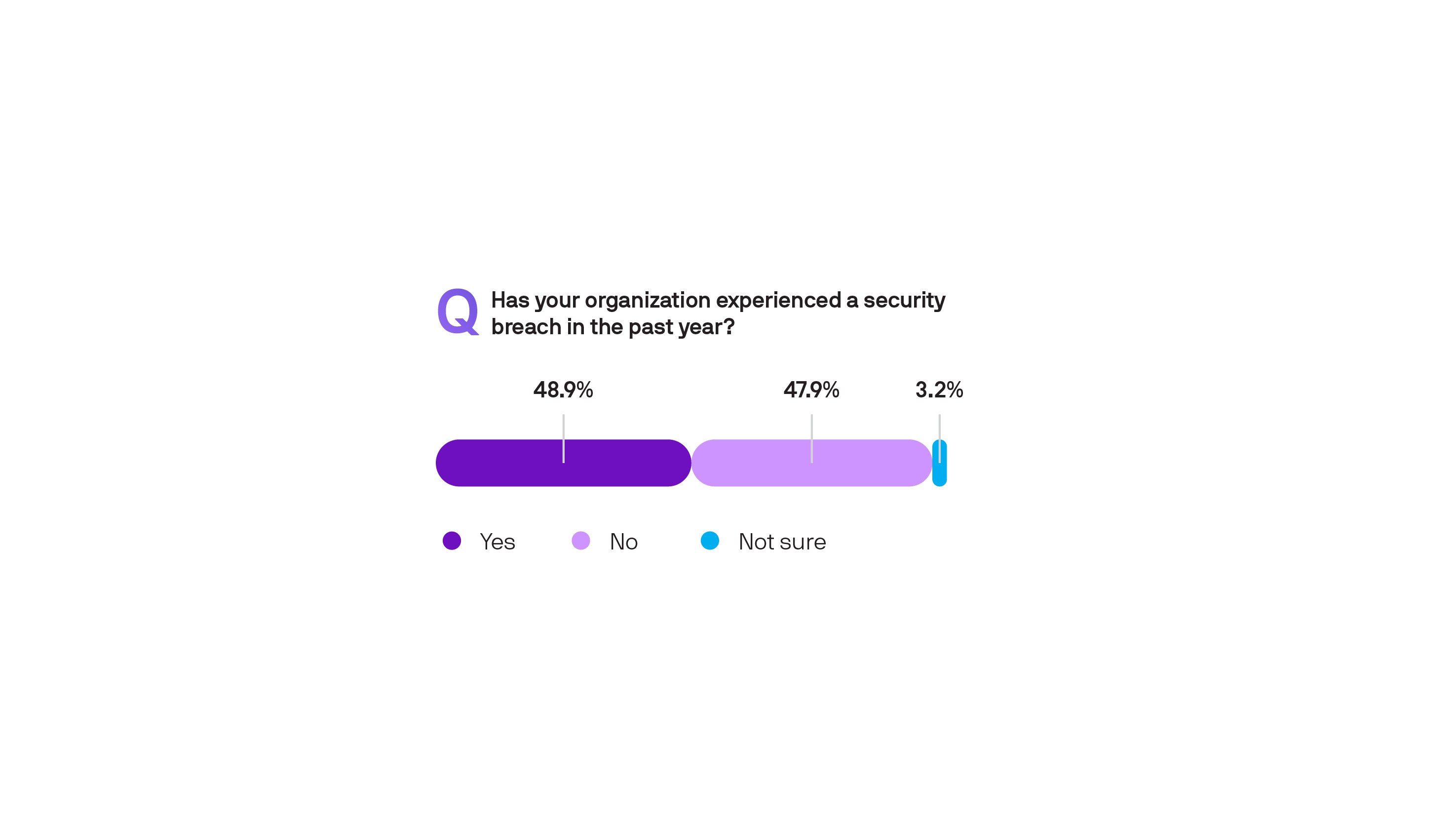
Of all survey respondents, 48.9% say yes, up from 41.8% in 2025.
Web access security remains a practical weak point
Because so much daily work happens in the browser, web access controls are a key part of modern security posture.
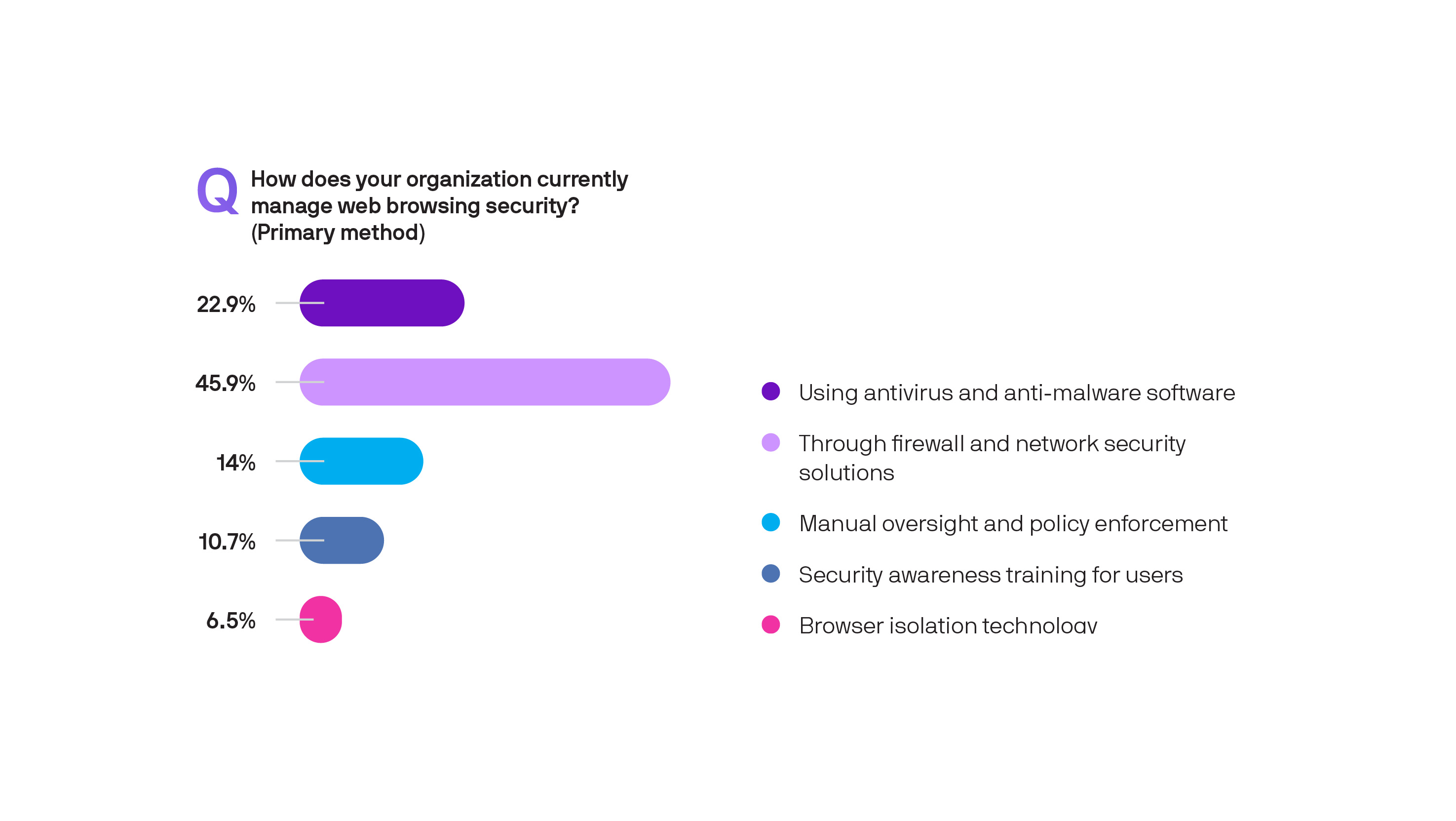
Q: How does your organization currently manage web browsing security? (Primary method)
Q: Is your organization concerned about data sovereignty?
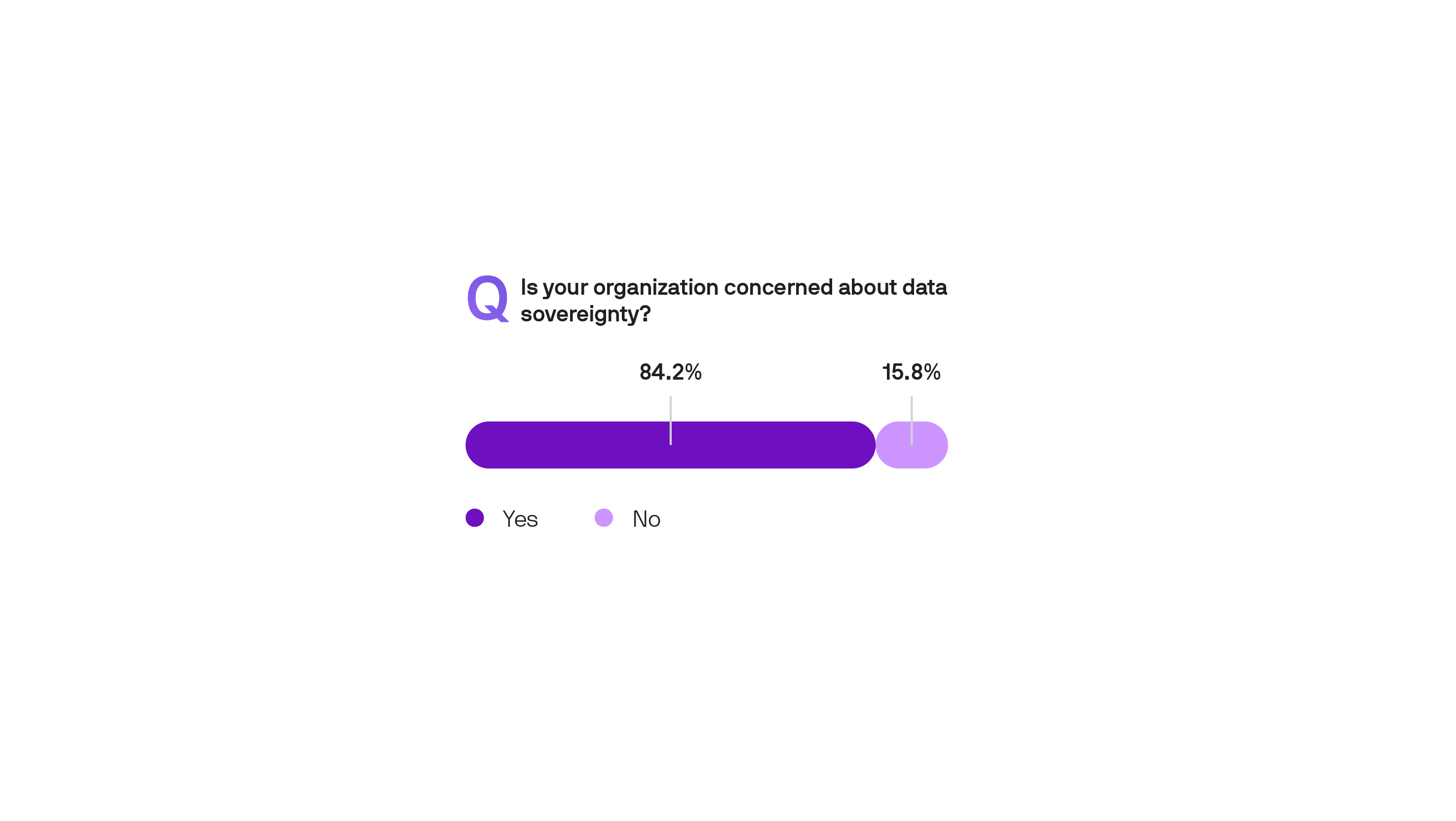
An overwhelming 84.2% of respondents say yes. Data sovereignty is now a core constraint
Q: What are your main concerns regarding data sovereignty? (Select all that apply)
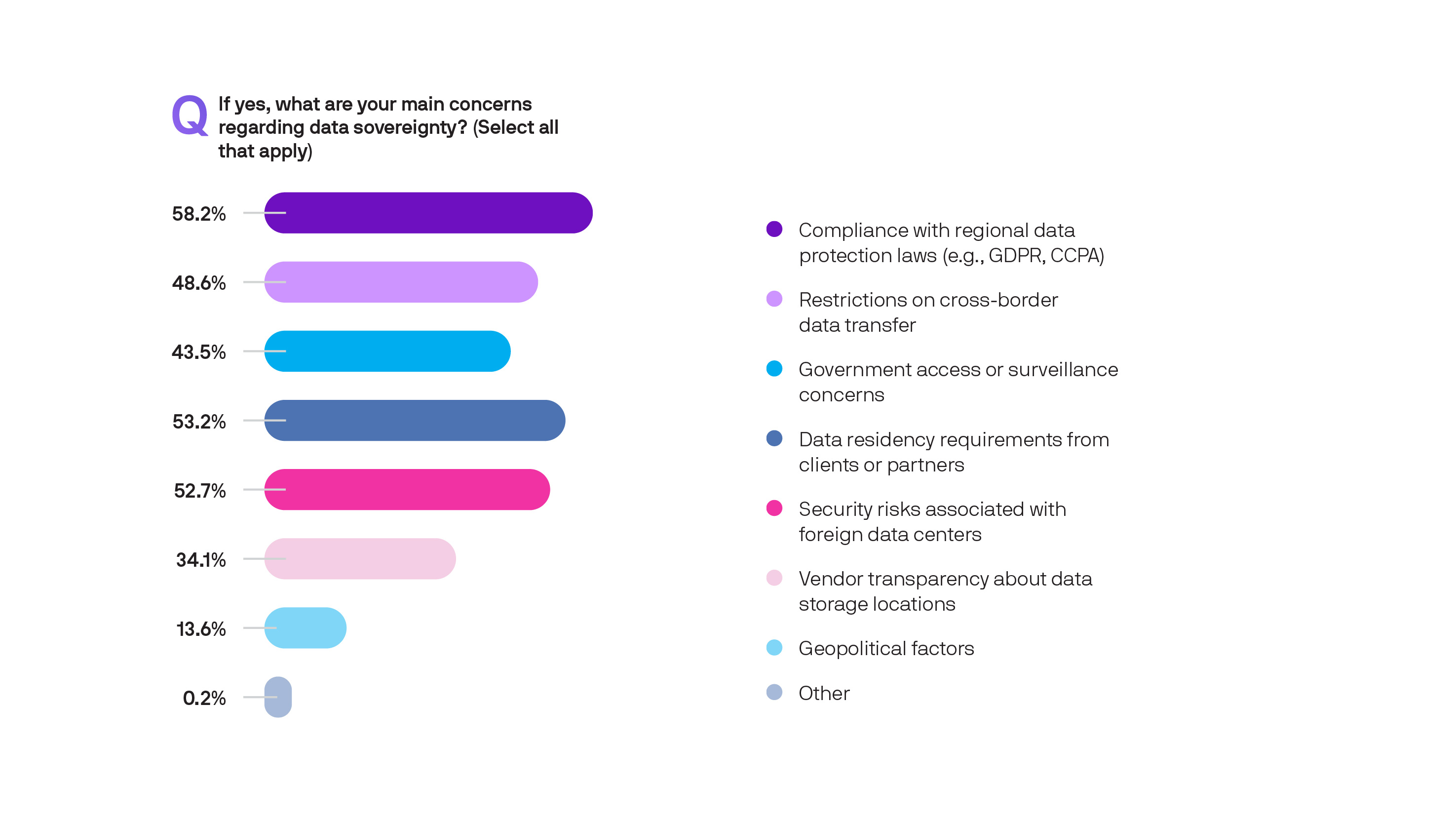
Top concerns include compliance with regional data protection laws (58.2%), client or partner data residency requirements (53.2%), and security risks associated with foreign data centers (52.7%).
Key insights
Security budgets are increasing, but hybrid work and SaaS growth expand the surface area teams must secure.
Nearly half of respondents report a breach in the past year, reinforcing the need for practical controls and consistent enforcement.
Data sovereignty is influencing both workload placement and vendor evaluation criteria.
Web access controls matter because browsers are the main gateway for many workflows, and primary defenses are still largely traditional.
Implications of cloud adoption in 2026 and beyond
The results point to a clear direction. IT leaders aren’t looking for more complexity. They’re looking for models that reduce operational effort, keep costs predictable, and support security and compliance requirements.
Three implications stand out:
EUC decisions are now cloud strategy decisions
The high intent to change DaaS and VDI solutions suggests end-user computing is being evaluated alongside cost control, vendor risk, and integration requirements.
Operational overhead is becoming a deciding factor
When IT staff time is the leading hidden cost, simplifying administration and reducing maintenance effort becomes a strategic outcome, not just a technical preference.
AI is being judged by measurable outcomes
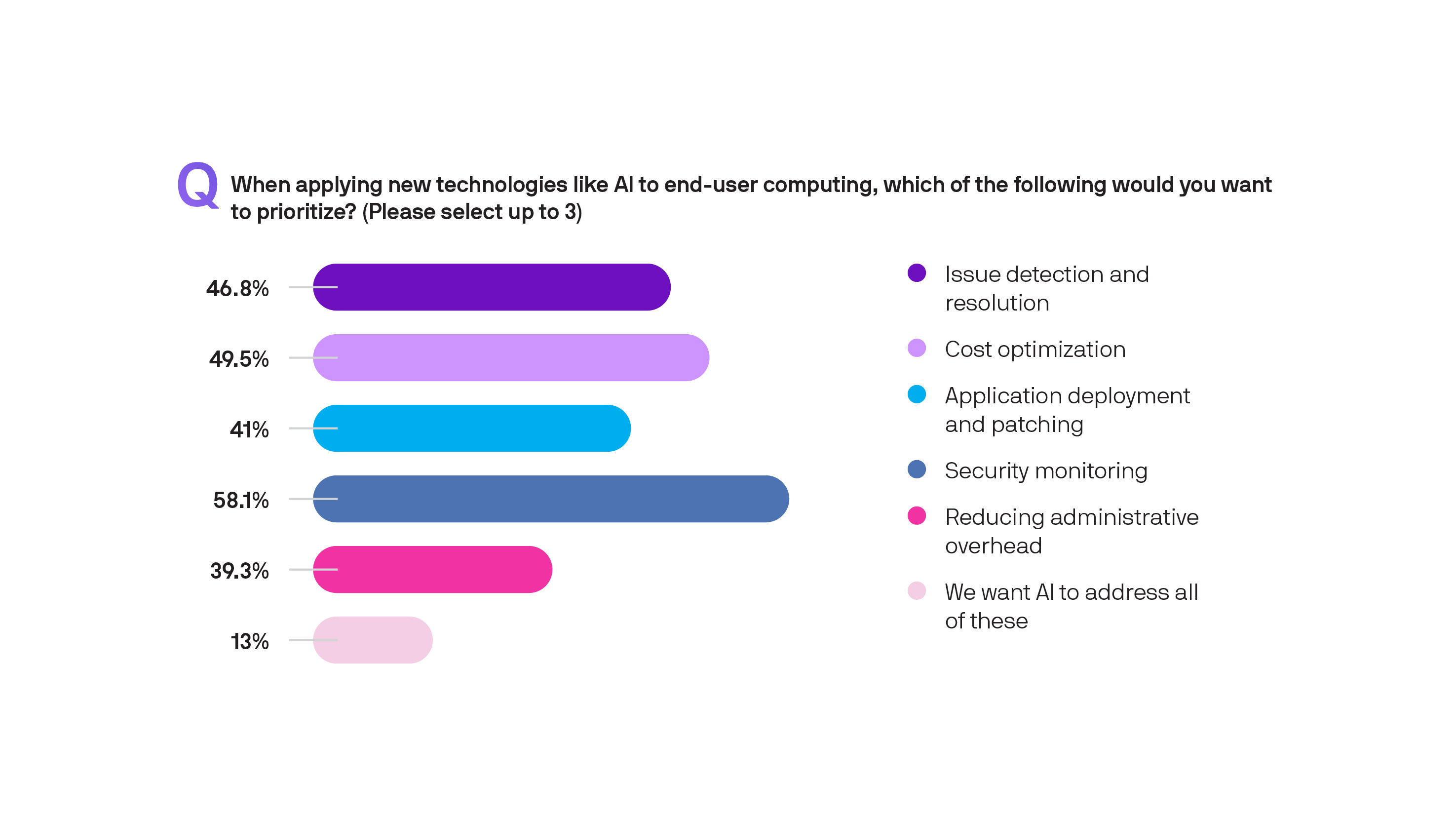
AI priorities concentrate on security monitoring, cost optimization, issue detection, patching, and admin reduction. Sentiment shows cautious investment behavior, with many still assessing benefits and a smaller portion willing to spend more specifically for AI features.
Why adopting the right cloud strategy is critical for IT leaders
In 2026, the most effective cloud strategies are built around control, manageability, and flexibility.
Based on this year’s results, IT leaders should focus on four actions:
Build hybrid work into security and delivery plans
Endpoint security management and access management are leading hybrid systems, and shadow IT is common. Align identity, access, endpoints, and web controls with how work actually happens.
Treat EUC transitions as a risk-managed project
Migration complexity and disruption risk are the top blockers. A phased approach reduces risk while preserving business continuity.
Measure total cost through operational effort
Beyond licensing, the biggest hidden cost is IT staff time, with additional overhead in security and training. Track operational hours and recurring effort as decision metrics.
Preserve optionality in vendor and infrastructure decisions
Lock-in concern is widespread, and uncertainty around support and roadmaps is shaping strategy. Favor approaches that integrate cleanly and leave room for future change.
With Parallels RAS, the path to app and desktop delivery starts here, no matter where your workloads live. Sign up for a free 30-day trial of Parallels RAS to start evaluating your next-step EUC strategy.